
When passengers experience missing baggage, canceled flights, or unresolved complaints, trust erodes swiftly, and regulatory consequences follow. Minuscule Technologies engineers Salesforce solutions that empower airlines, aviation service companies, and MRO operators to manage customer interaction with speed, traceability, and comprehensive audit accountability.


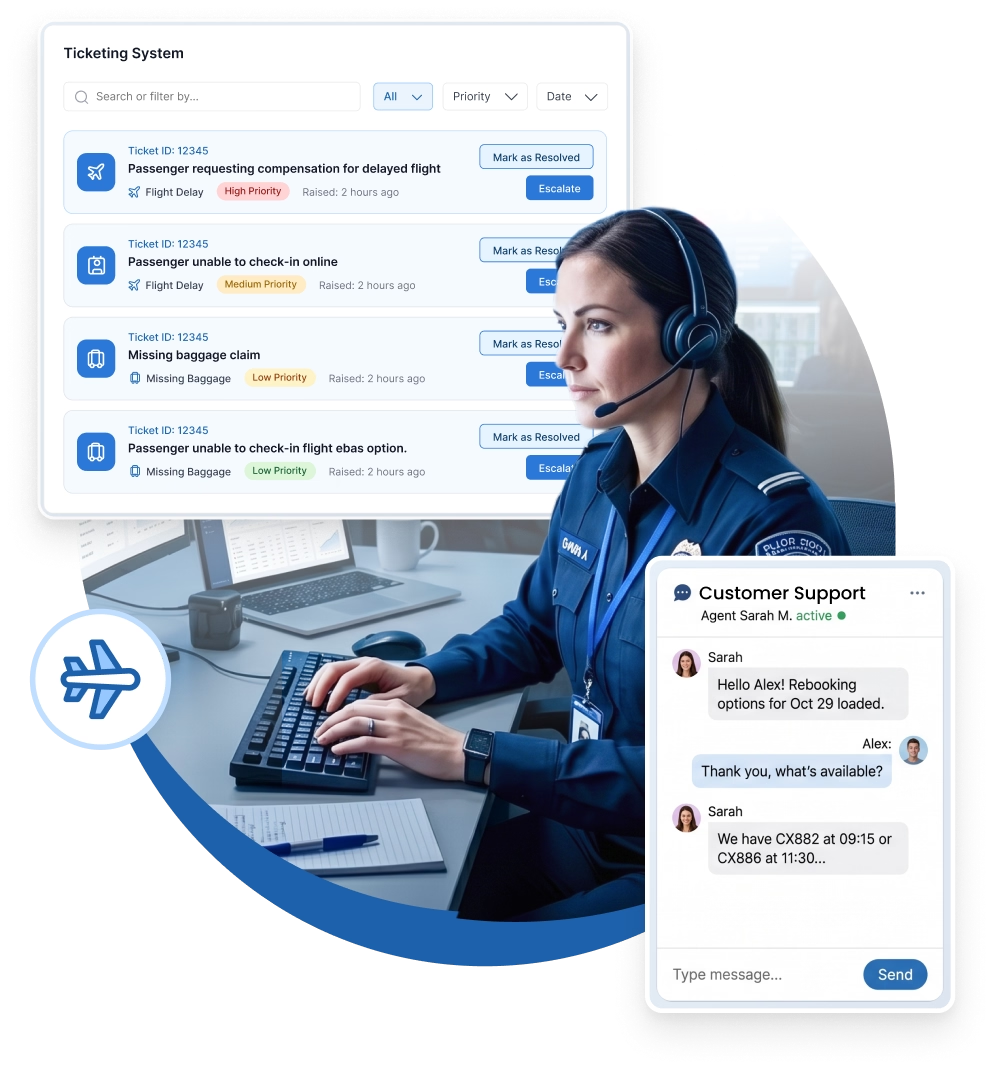
The gaps that turn a minor inconvenience into a regulatory complaint or a lost customer

Complaints Handled Across Fragmented Channels
Calls, emails, web forms, and social messages result in disjointed records across multiple systems. Agents lack a holistic view. Customers must repeat information. Cases are prone to being overlooked between channels.

Case Reopening Has No System
A passenger receives a resolution they disagree with, and emails back. That email creates a new case — disconnected from the original. History is lost. The agent starts from scratch.

Feedback Type Drives No Routing Logic
Compliments, inquiries, requests, and formal complaints default to the same queue and receive identical handling. Agents assign workflows manually, producing inconsistent routing and highly variable resolution times.

No Structured Baggage Tracing Workflow
Lost luggage complaints are collected without a formal structure. Staff initiate searches without centralized tracking, and passengers receive updates inconsistently by phone, if at all. Resolution timelines remain untraceable.

SLA Timelines are Not Enforced Automatically
Regulatory and service-level complaint timelines are tracked manually, if at all. Escalations occur reactively after SLA breaches. High-priority complaints remain hidden until they escalate into major issues.

No Passenger Self-Service Layer
Passengers must call or email status updates on cases that could be accessed independently. Contact center volumes remain unnecessarily high, and agents are spending more time on status updates than on resolutions. Digital deflection is completely absent.
We build for both the passenger-facing contact centre and the operational teams behind it — because exceptional airline customer service depends on both sides working from the same data.
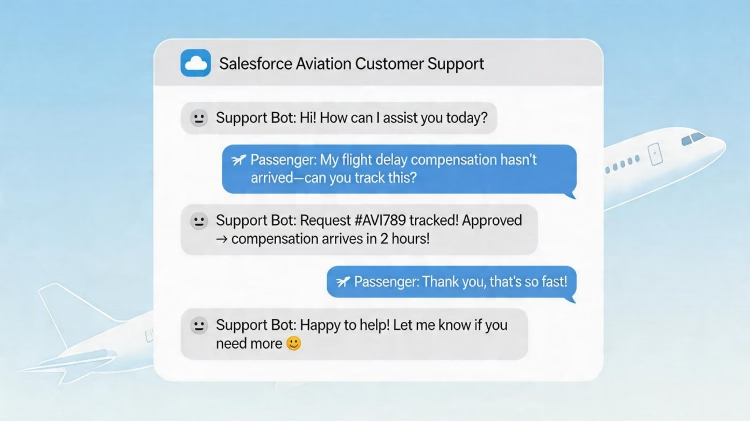
We deploy live chat on Salesforce Service Cloud, letting passengers raise complaints, track requests, and get answers without calling. Chatbots handle common inquiries and escalate with full context. Call center volume drops. Resolution starts faster.

We set Salesforce to classify each interaction and automatically route it based on type, priority, and passenger tier. Complaints are directed to specialists, and inquiries are directed to information agents. No more one-size-fits-all queues.
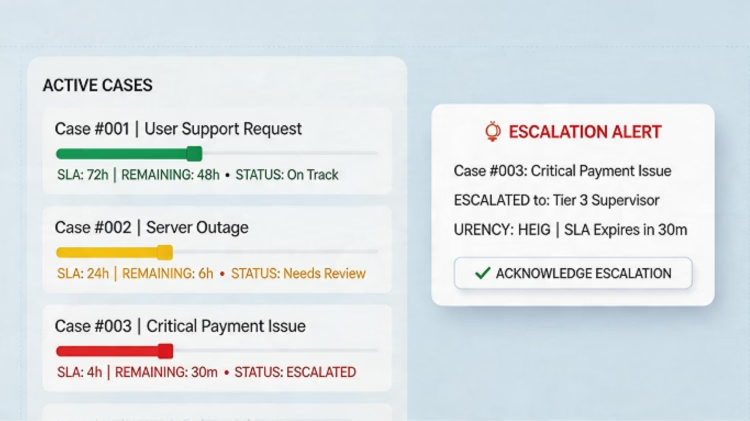
We build SLA timelines into Salesforce case workflows—regulatory and service targets enforced automatically. Cases near breach of surface to supervisors before deadlines. Escalation happens in Salesforce, not by late phone calls.

We set up Salesforce so that when a passenger replies to an unsatisfactory resolution email, the original case reopens automatically, preserving the conversation. The right agent continues without needing the passenger to repeat.
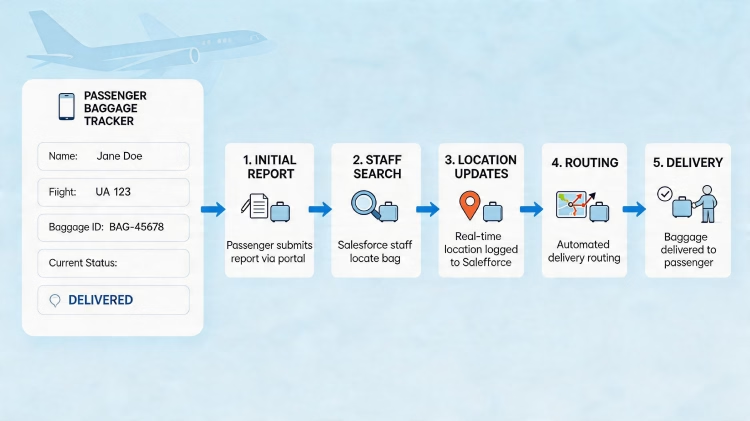
We create end-to-end baggage workflows in Salesforce—from initial reports to staff search, location updates, routing, and delivery. Every stage is logged. Passengers track status in a self-service portal or via updates. Teams avoid managing searches by phone or spreadsheet.
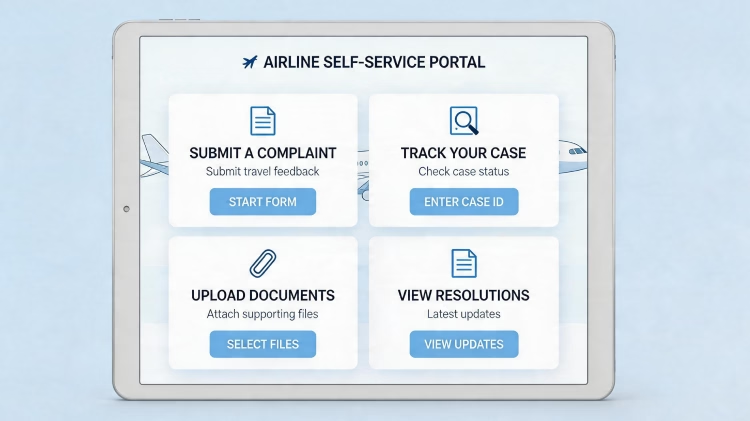
We build self-service portals where passengers submit complaints, track cases, upload documents, and get resolution updates—without contacting an agent. Deflection improves. The contact center handles complex cases. Passengers feel in control.
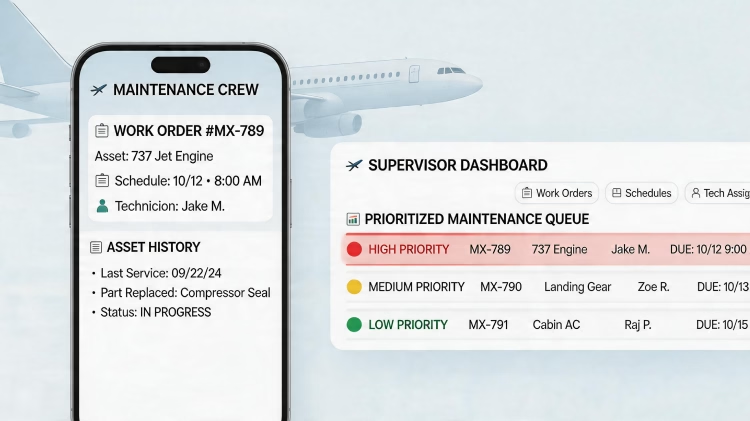
We configure Salesforce for MRO—work order management, asset history, maintenance schedules, and technician assignments. Crew access job details on mobile. Supervisors view and prioritize the plane maintenance queue by need.
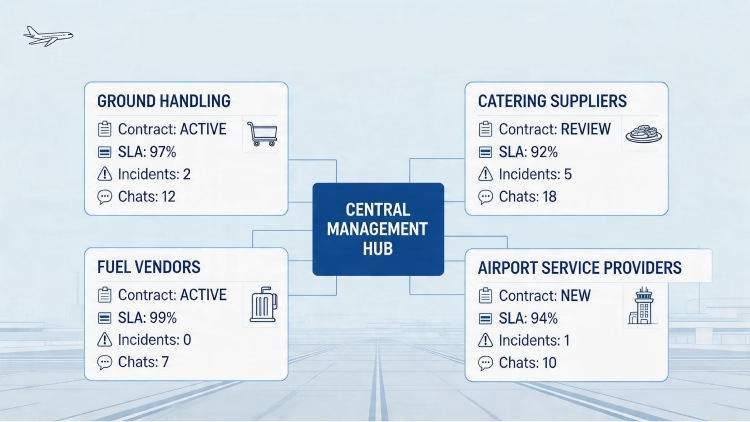
We build Salesforce to manage ground handling partners, catering suppliers, fuel vendors, and airport service providers — tracking contracts, SLA performance, incident reports, and communication history in one place. Partner accountability becomes measurable as Salesforce centralizes management of partners and vendors for ground handling, catering, fueling, and services—tracking contracts, SLAs, incidents, and communications to ensure accountability and resolve disputes efficiently. Operations teams stop coordinating freight status over the phone and email.
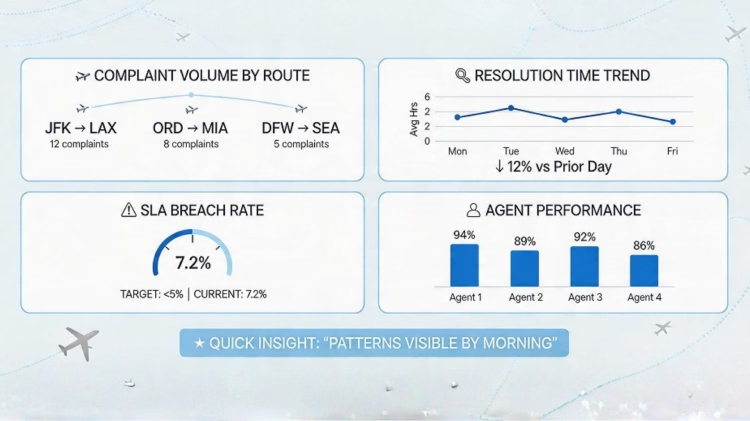
We build Einstein Analytics dashboards for aviation operations — complaint volume by route, resolution time trends, SLA breach rates, and agent performance — giving management real-time visibility into service quality across the network. Patterns that previously took a month to surface appear in the dashboard the next morning.
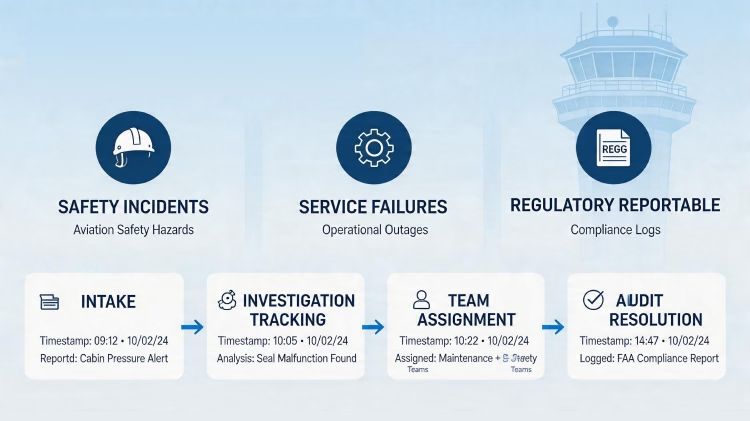
We configure Salesforce to manage safety incidents, service failures, and regulatory reportable events — with structured intake, team assignment, investigation tracking, and full audit trail documentation. Every action is timestamped. Reporting to regulators uses data pulled directly from Salesforce, not reconstructed from memory.

Airline Client
A regional airline group was managing passenger complaints across calls and emails with no structured routing, no SLA enforcement, and no case reopening mechanism. We built a web-based live chat platform integrated with Salesforce Service Cloud — smart routing by feedback type, SLA monitoring with automated escalation, email-based case reopening, and a unified agent console covering all incoming channels. Contact centre efficiency improved immediately. No complaint fell between channels.
Outcome → Unified complaint handling, automated SLA enforcement, live chat deflection
Airline Client
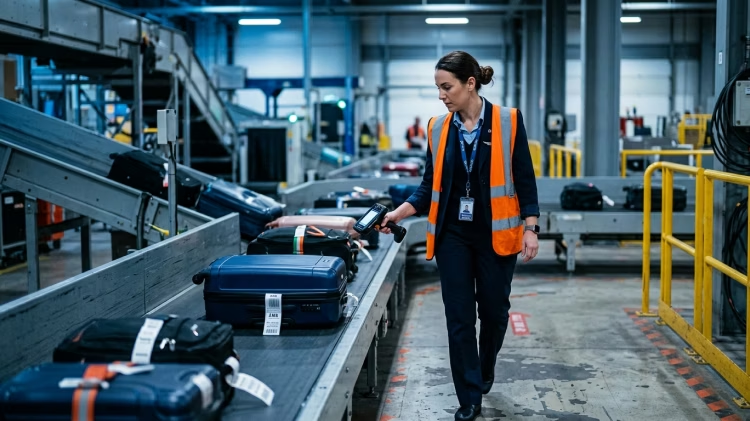
Passengers with lost baggage had no visibility into the search process, staff had no centralised tracking system, and resolution timelines were entirely manual. We built a nine-step baggage tracing workflow in Salesforce — chatbot intake, automatic case creation and assignment, acknowledgement automation, search tracking with real-time stage logging, location updates, routing coordination, and delivery confirmation — all inside one platform with every step auditable.
Outcome → Full baggage trace visibility, automated passenger updates, auditable trail

Airline Client
Passengers calling for case status updates were consuming significant contact centre capacity — most queries were simple status checks that needed no agent involvement. We built a passenger self-service portal on Salesforce Experience Cloud with case submission, document upload, real-time status tracking, and automated resolution notification. Inbound call volume dropped. Agents focused on genuine resolution work rather than status call-backs.
Outcome → Reduced inbound volume, faster case resolution, improved passenger satisfaction
Aviation customer service has no margin for system failure — we build accordingly.
Proven in aviation: Live airline deployments in production — complaint management, baggage tracing, and self-service portals built and running at scale.
Audit-ready: Every case stage, escalation, and resolution is timestamped inside Salesforce. Regulatory reporting uses live data, not retrospective reconstruction.
Omnichannel-native: We build for every channel passenger use — web, email, chat, and social — unified into one agent console with full case history.
Engineering-depth: 160+ certified Salesforce engineers and 30+ QA specialists ensure every workflow performs under operational load before go-live.
One promise: Salesforce that fits your business.
One partner, all clouds. Our expertise ensures each Salesforce product delivers maximum ROI.


Business analysis, roadmap creation, architecture design.


Greenfield setups, best-practice configurations, clean deployments.

Zero-loss transfers, deduplication, AI-ready harmonization.

Custom Apex, Lightning components, platform solutions.

ERP connectivity, API development, system unification.

User management, security, compliance, governance.

Workflow automation, custom objects, process optimization.

24/7 monitoring, proactive maintenance, continuous optimization.
Tell us where your contact center, complaint handling, or operational management is breaking down — our engineers will give you a direct, honest view of what Salesforce can solve and how we'd approach it.

Schedule a Free Strategic Call


