
From the Control Room to the Last-Mile Field Team
Power companies, utility providers, and energy organizations can't afford disconnected systems. Without up-to-date information, buyer trust erodes rapidly. Minuscule Technologies delivers Salesforce solutions that connect your customer service, dispatch, field operations, and asset management into a single platform—boosting trust, response speed, and operational reliability.




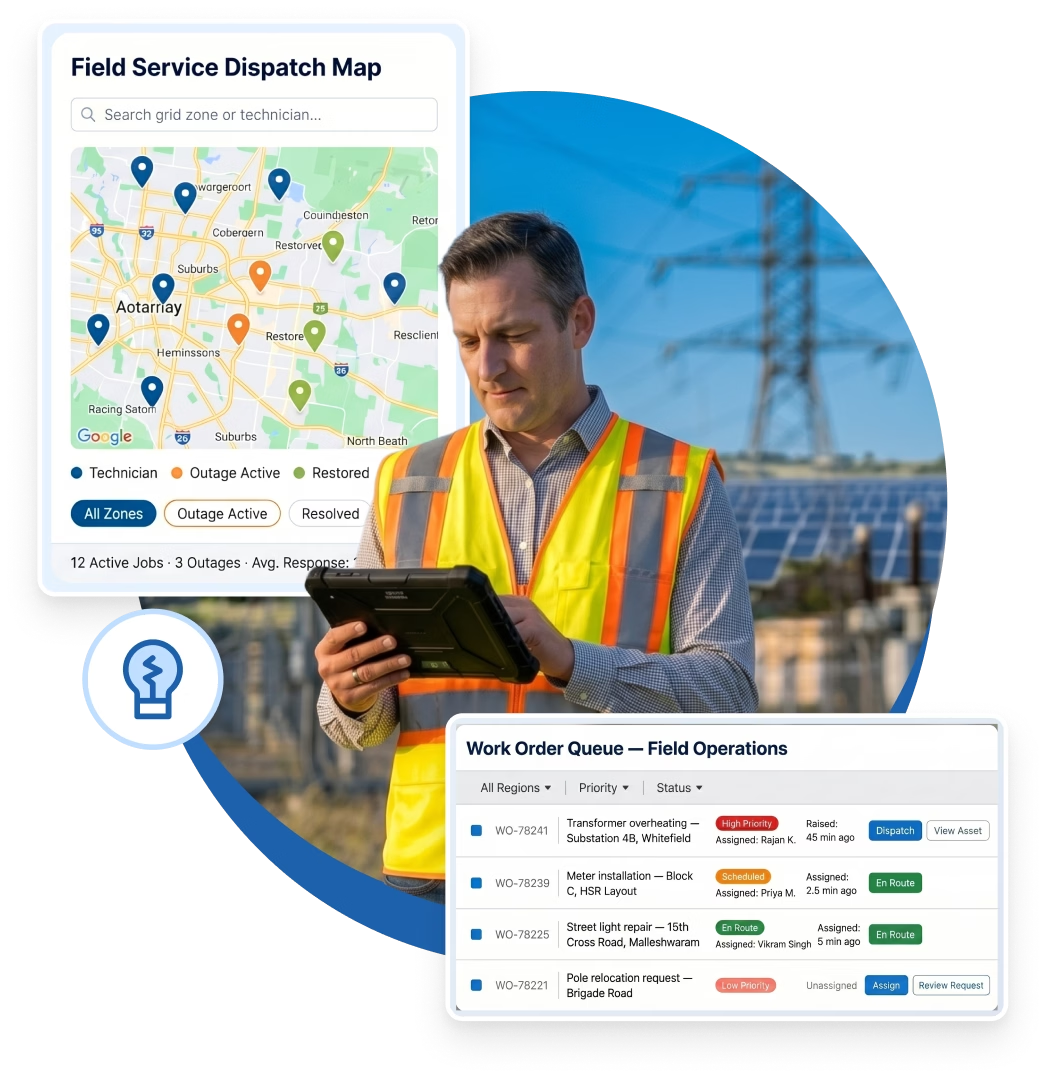
What energy & utility operations look like before and after a properly engineered Salesforce deployment.
Whether you run electric, gas, water, or renewable operations — we engineer Salesforce to match the way your field teams, dispatchers, and customer service agents actually work.

Salesforce Field Service Implementation

Work Order Automation & Asset Management

Customer Location Grouping & Territory Management

Customer Service & Omnichannel Case Management

Dispatcher Console & Real-Time Field Visibility

Outage Management & Reconnection Workflows

Einstein AI & Predictive Maintenance

CIS & Legacy System Integration

Vehicle Inspection & Fleet Compliance

Clean Energy & EV Program Management

Customer Self-Service Portal (Experience Cloud)

Field Operations Reporting & Dashboards
Utility Client
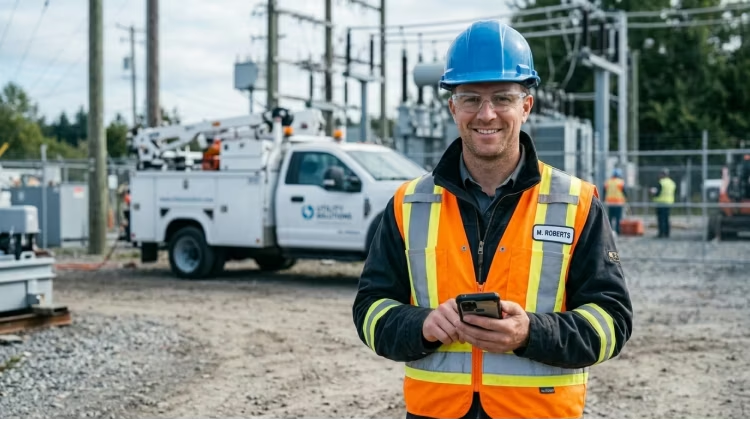
A national utility operator was grouping customer locations in Excel, assigning field tasks manually, and running paper-based vehicle inspections with no real-time supervisor visibility. We built location grouping by lat/long, automated case distribution by case type and customer group, a digital vehicle inspection system, and a real-time dispatcher console with geo-fencing — all inside Salesforce Field Service and the Salesforce mobile app.
Outcome → 24% higher case completion rate, live field visibility
Utility Client
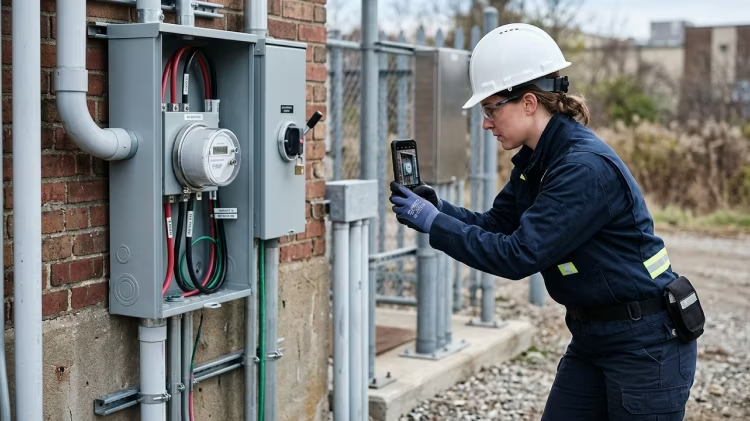
Defaulting customers triggered manual disconnection processes — field teams dispatched without full context, reconnection dependent on email-based coordination. We built automated work order generation from payment default data, photo evidence upload requirements, dispatcher console visibility, and payment-triggered reconnection workflows. The entire loop — from default identification to reconnection confirmation — now runs inside Salesforce.
Outcome → Faster reconnections, full audit trail, zero manual coordination
Utility Client
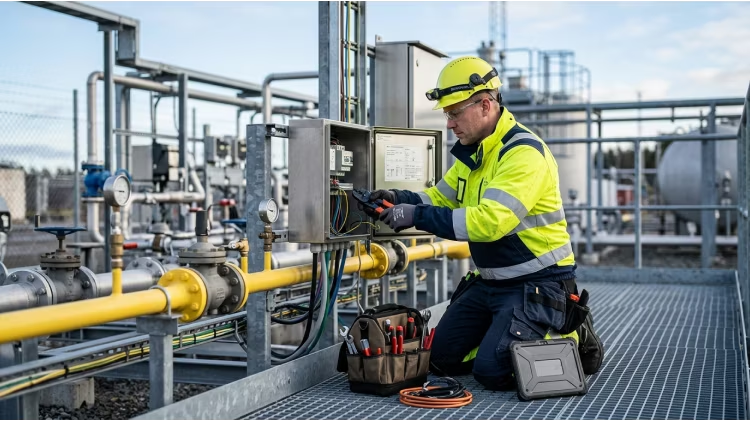
Field workers relied on SMS to receive job assignments and report completion — no proof of work, no location tracking, no visibility into task urgency. We deployed a Salesforce mobile app with real-time job updates, status tracking (en route / on-site / complete / on break), photo upload as proof of completion, and location-based task recommendations. Dispatchers see everything live without a single phone call.
Outcome → Real-time field visibility, verifiable proof of work
Field operations engineering is harder than it looks — here's what we bring to it.
Mobile-first: We build the technician in the field — not just the manager at the desk. Every workflow is tested on the mobile before it goes live.
Integration-deep: CIS, billing, ERP, telematics, and legacy OT systems — we connect what field operations and customer service depend on.
AI-powered: Einstein AI for forecasting maintenance and anomaly detection. Agentic DevOps for continuous delivery. AI is in how we build, not just what we pitch.
Proven output: We've achieved measurable field-efficiency gains in live utility environments — not in pilot programs, but in production systems running at scale.
One promise: Salesforce that fits your business.
One partner, all clouds. Our expertise ensures each Salesforce product delivers maximum ROI.

Tell us where the friction is — whether it's in dispatch, customer service, asset management, or legacy system integration. Our engineers will give you a straight answer on what Salesforce can solve and how we'd approach it.

Schedule a Free Strategic Call


